Portfolio Building Workshop
What’s a portfolio? And why should you build one?
Portfolios are what you use to tell your creative story. Having a strong portfolio will help you in a lot of ways: Applying to school, sharing your work with potential employers, or just getting to know yourself better on your artistic journey. But it can be hard to know where to start. That’s where LINK comes in!
In this workshop, you’ll get top advice from professional creatives who have first-hand experience building their own portfolios for school and work. You’ll get the opportunity to take portfolio-quality photographs of your work, receive feedback on anything in progress, and conduct mock interviews to develop your verbal story. Join us in learning about applying for arts school programs, and how to apply for the LINK Senior Scholarship!
Student Prep:
- Bring your artwork! All kinds of visual art are welcome. Pieces can be in-progress or complete
- We’ll assist you with photographing up to 3 of your pieces using professional guidelines
- If you’d like help deciding which pieces to focus on, bring as many as you like and we’ll help you narrow it down!
- Notebooks for note taking are encouraged (we'll have a few extras for those who don't have notebook access)
About the Artist:
After graduation, I got swept into the software development world. Design became my career, but I kept my hand in art, taking courses in cartooning and illustration whenever I could. Over the years, I worked on projects for REI, Nintendo, AT&T, Wizards of the Coast, and eventually Microsoft - building design systems and interfaces that helped people interact with complex technology.
Then the pandemic hit. A class I took with my daughter, led by TenHundred, introduced me to SMOE NOVA and the world of graffiti. Suddenly I was back to that fundamental question from my comic book days: how do letters communicate beyond just their meaning? Graffiti brought together everything - the narrative drive from comics, the typographic precision from design, and a raw, immediate way of making art in public space.
Now my practice spans both worlds. Whether I'm designing conversational AI interfaces or painting letters on a wall, I'm asking the same questions about communication, rhythm, and how form shapes meaning. The kid on the bike heading to the comic shop is still chasing the same thing: finding where words and images meet.
leading this workshop
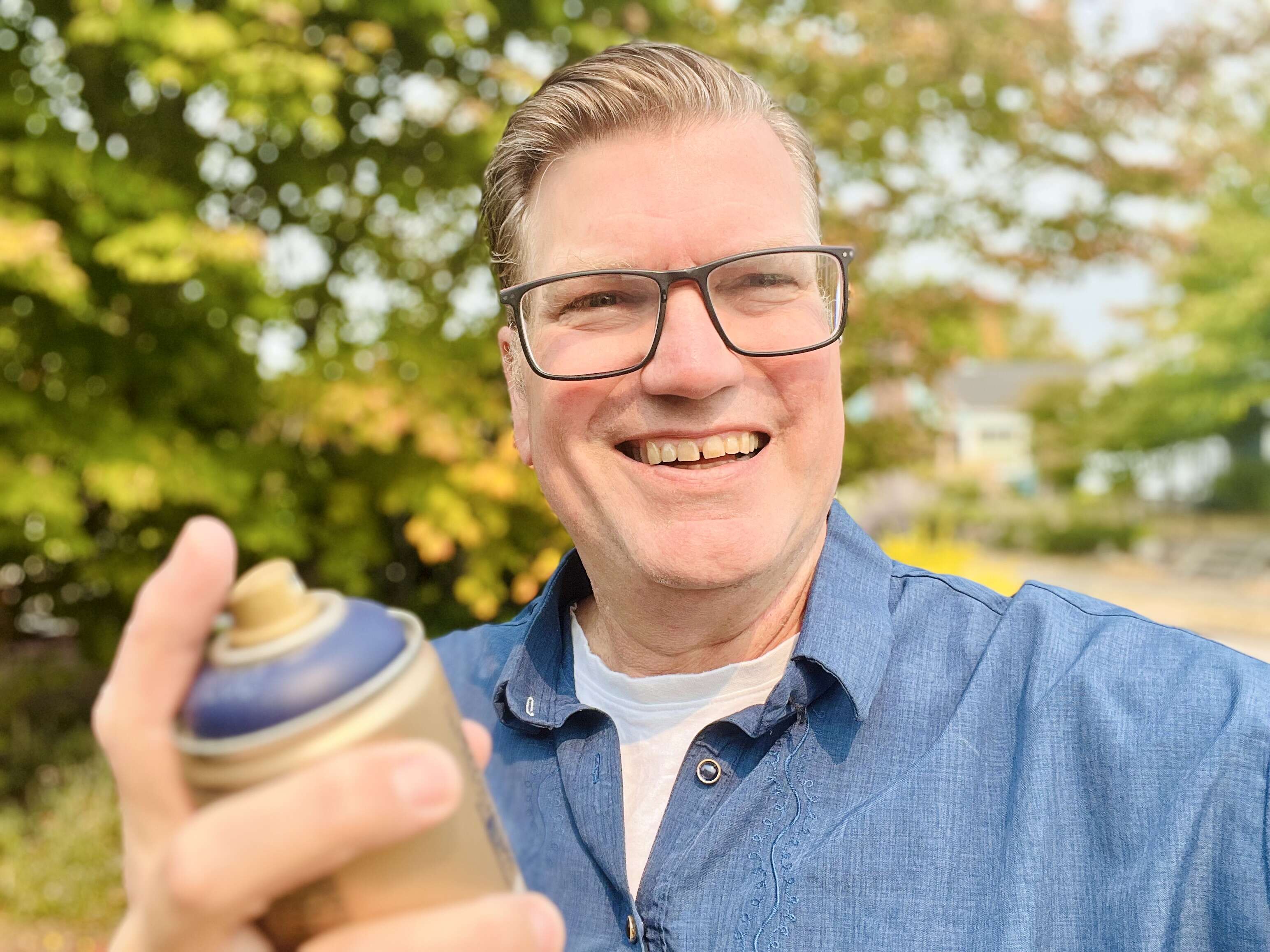
Marty Hall
Guest Artist
Joy Dayaw
Workshop Coordinator